Why the Category Label Drives Everything Else
Before the table, understand what category determines on a real job site. Category sets the personal protective equipment our technicians wear, the antimicrobial products we apply, whether porous materials can be dried in place or must be removed, and how aggressively we set up containment. It also sets the documentation standard your adjuster will expect. A Category 1 loss with photos and moisture readings reads very differently in a claim file than a Category 3 loss handled the same way, and an underwriter who sees sewage notes without proper containment documentation will push back hard.
The other thing category determines is time. Category 1 water can degrade to Category 2 within roughly 24 to 48 hours depending on temperature, materials, and dwell time. Category 2 can degrade to Category 3 in a similar window. A clean supply line break in a Geist basement that sits over a long weekend is no longer a clean water loss by Tuesday morning. That degradation curve is why professional water damage restoration response time is not marketing language. It is the difference between drying your hardwood and replacing it.
Temperature accelerates this curve. A Geist home with the HVAC running at 72 degrees creates ideal conditions for microbial amplification, and bacteria counts can double every 20 minutes in standing water at that temperature. A cold crawlspace in February buys you more time, but not unlimited time. Dwell time on porous materials matters even more than air temperature, because carpet pad, drywall paper, and OSB subfloor wick water capillary action far beyond the visible wet line. By the time you see staining, the substrate behind it has often been saturated for hours.
The Three Categories Side by Side
| Factor | Category 1 (Clean) | Category 2 (Grey) | Category 3 (Black) |
|---|---|---|---|
| Source examples | Supply line break, ice maker line, water heater intake, sink overflow with clean water, rainwater through a fresh roof opening | Dishwasher discharge, washing machine drain, toilet overflow with urine only, aquarium leak, sump pit water, shower pan leak that has sat | Sewage backup, toilet overflow with solids, ground floodwater, rising river or storm surge, any Cat 1 or Cat 2 sitting beyond 48 hours |
| Contamination level | No significant biological or chemical hazard at the source | Significant contamination, can cause illness if ingested or contacted | Grossly contaminated, contains pathogens, sewage, or toxins |
| PPE required | Standard gloves, eye protection, basic respirator if airflow is high | Nitrile gloves, N95 or half-face respirator, eye protection, dedicated boots | Full Tyvek suit, full-face respirator with P100 cartridges, double gloves, decon protocol |
| Carpet and pad | Pad replaced, carpet often saved with extraction and in-place drying | Pad always discarded, carpet usually replaced unless caught very early | Carpet and pad always removed and disposed of as contaminated waste |
| Drywall | Dried in place if caught within 24 hours, flood cuts only if saturation is deep | Flood cuts typically 12 to 24 inches above the waterline | Flood cuts 24 inches minimum above the contamination line, sometimes full removal |
| Subfloor and framing | Dried in place with mats and air movers, moisture mapped daily | Sanitized, dried, sometimes encapsulated after drying | Often cut out and replaced if saturation is deep, all surviving material sanitized |
| Antimicrobial use | Optional preventative application | Required, EPA registered hospital grade disinfectant | Required, multiple applications, full surface treatment |
| Containment | Minimal, plastic at room thresholds | Moderate, negative air on the affected area | Full containment with negative air, HEPA filtration, decon entry |
| Typical Geist cost range | $1,500 to $4,500 | $3,000 to $8,000 | $7,000 to $20,000 or more |
| Drying timeline | 3 to 5 days | 4 to 7 days | 5 to 10 days plus rebuild |
| Insurance posture | Usually covered if sudden and accidental | Usually covered, may need sewer or drain rider depending on source | Sewage backup needs specific endorsement, flood from outside needs NFIP policy |
What This Means for Your Specific Loss
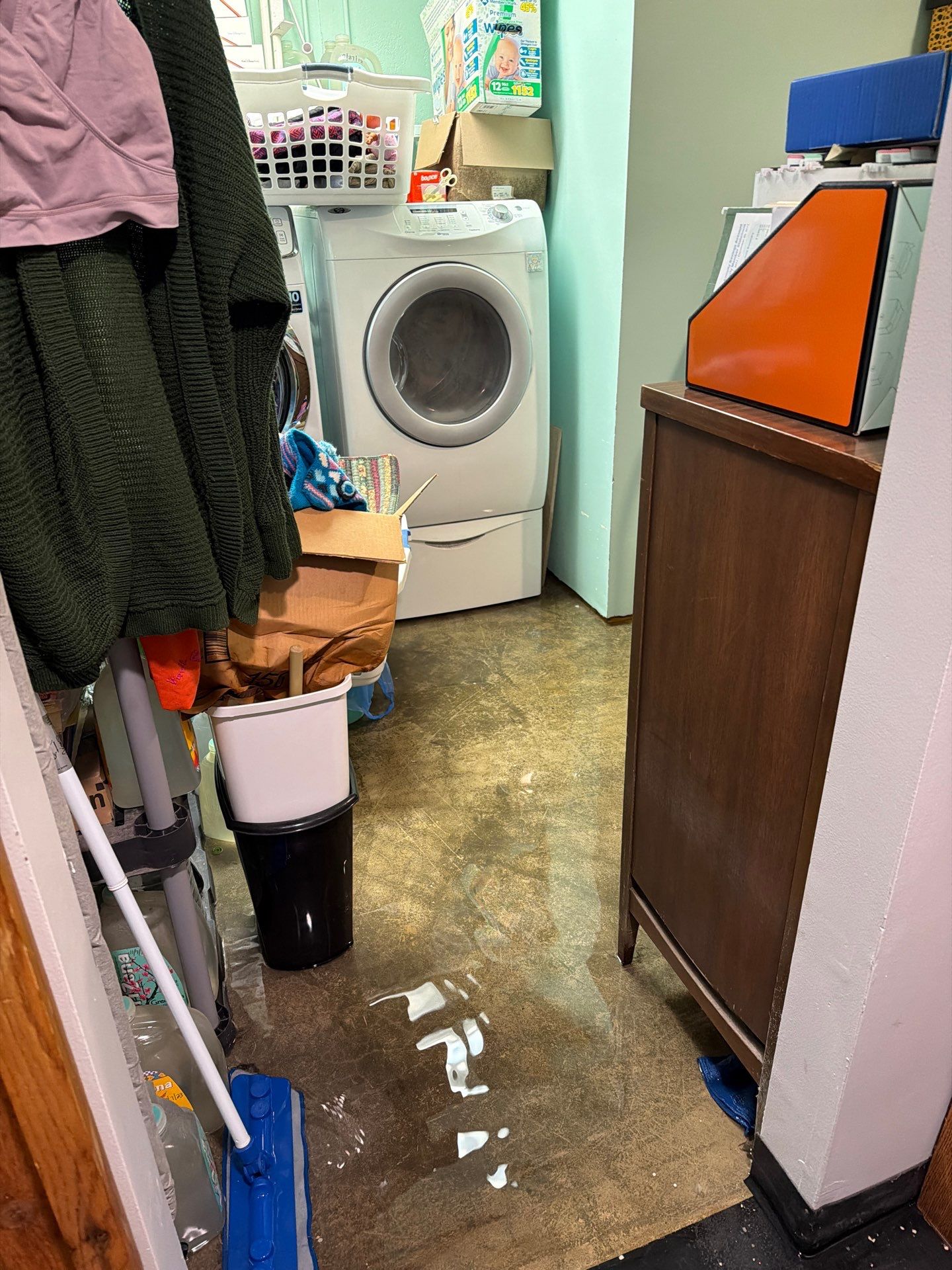
The table is the tool, but the judgment calls happen on site. A washing machine supply line that broke an hour ago is Category 1, and our crew can usually extract, set air movers, and save your flooring with no demo. The same washing machine where the drain hose discharged across a finished basement is Category 2 from the first minute because that water carried detergent, soils, and biological residue from the machine. A sewer backup from a city main is Category 3 from the source and stays Category 3 even after it dries, which is why black water cleanup follows a fundamentally different protocol than a clean water loss.
Insurance language tracks these distinctions closely. Your standard Geist homeowners policy covers sudden and accidental water discharge from a plumbing system, which usually maps to Category 1 and many Category 2 events. Sewage backup is excluded unless you carry a water or sewer backup endorsement, typically $5,000 to $25,000 in coverage. Surface flooding from heavy rain or rising water is excluded entirely unless you carry an NFIP flood policy. When you call us, the first thing we document is the source, because that single fact decides whether your adjuster opens the claim under your dwelling coverage, your endorsement, or denies it entirely. For more on what your policy actually pays, read our breakdown of what homeowners insurance covers for water damage.
Health Risks That Track With Category
Category also predicts who in the household is most at risk during the loss. Category 1 water poses minimal health concern beyond slip hazards and the eventual mold growth if drying is delayed. Category 2 carries bacteria like E. coli at lower concentrations, fungal spores, and chemical residues that can trigger respiratory irritation, skin reactions, and gastrointestinal symptoms if ingested. Category 3 is the one where we ask immunocompromised residents, pregnant occupants, infants, and elderly family members to relocate during cleanup. Sewage and floodwater can carry hepatitis A, giardia, cryptosporidium, salmonella, and tetanus risk through any cut or abrasion. Geist Water Restoration technicians are vaccinated and trained for these exposures. Your family is not, and a few nights in a hotel is cheaper than a week of antibiotics.
The practical takeaway: do not guess the category. Send photos, describe the source honestly, and let an IICRC certified technician make the call before you start pulling up carpet or running a shop vac through contaminated water. Geist Water Restoration handles all three categories every week in Geist, and the call is free regardless of what you end up needing.